One Milligram Isn't Always the Answer: What Dose Optimization Research Reveals About Finasteride
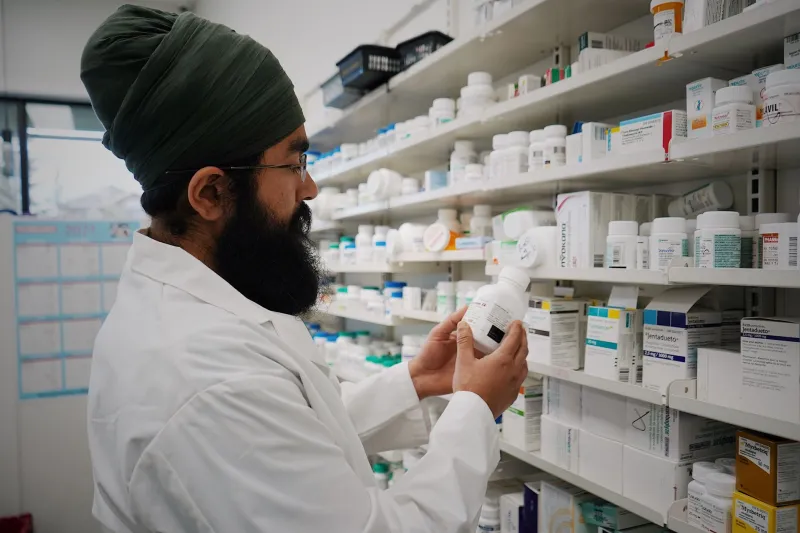
For most men in the United States who begin finasteride therapy, the prescription arrives with a straightforward instruction: take one 1mg tablet daily. That dose has been the clinical standard since the FDA approved finasteride for androgenetic alopecia in 1997, and for good reason — the pivotal trials supporting approval used it, and it demonstrably works for a large portion of patients.
But "works for a large portion" is not the same as "is optimal for everyone." A closer look at the pharmacological research reveals something more nuanced: the relationship between finasteride dosage and DHT suppression is not strictly linear, individual biology plays a substantial role in how the drug behaves, and a small but credible body of evidence suggests that some patients may achieve comparable — or even superior — outcomes at doses lower than the established standard.
This is not an invitation to self-prescribe or deviate from your physician's guidance. It is, however, an important conversation that more patients and prescribers are beginning to have.
Why 1mg Became the Standard — and Why That Doesn't Make It Universal
The 1mg daily dose was selected through dose-ranging studies conducted in the early 1990s. Researchers tested several doses and found that 1mg produced meaningful DHT suppression — roughly 60 to 70 percent reduction in scalp DHT — while minimizing systemic exposure compared to the 5mg dose used for benign prostatic hyperplasia.
What those early studies also found, though less frequently cited in consumer-facing materials, was that lower doses produced substantial DHT suppression as well. A landmark 1999 study published in the Journal of Investigative Dermatology examined doses ranging from 0.01mg to 5mg and found that even 0.2mg daily suppressed scalp DHT by approximately 50 percent. The 1mg dose was not selected because lower doses failed — it was selected because it provided a margin of efficacy with a well-tolerated safety profile.
That distinction matters. It opens a legitimate scientific question: for patients whose hair follicles respond adequately to 50 percent DHT suppression, is 1mg providing more pharmacological activity than necessary?
The Role of Individual Metabolic Variation
Finasteride is metabolized primarily by the liver enzyme CYP3A4, and its activity at the 5-alpha reductase enzyme is influenced by a range of genetic and physiological factors. Men with higher baseline 5-alpha reductase activity may require more aggressive suppression to halt follicle miniaturization. Conversely, men with lower baseline enzyme activity — or those whose hair follicles are less sensitive to DHT — may achieve sufficient results at reduced doses.
Body weight, hepatic function, and even dietary patterns can influence how finasteride is processed and distributed. A 150-pound man with average liver enzyme activity does not have the same pharmacokinetic profile as a 220-pound man with elevated CYP3A4 expression. Yet both are typically handed the same 1mg prescription.
This is not a flaw in how finasteride is prescribed so much as a reflection of how pharmaceutical dosing works in practice: population-level data drives approval, and individualized titration is left to clinical judgment.
What the Emerging Research on Lower Doses Actually Shows
Several studies conducted after finasteride's initial approval have revisited the dose-response question with more granular methodology. A frequently referenced 2002 study found that 0.5mg daily produced DHT suppression statistically comparable to 1mg in a substantial proportion of subjects. Hair count outcomes, while slightly more variable at the lower dose, remained within a clinically meaningful range for most participants.
More recently, interest in alternate-day dosing — typically 1mg taken every other day, approximating a daily average of 0.5mg — has grown among both patients and prescribers. Finasteride has a half-life of approximately six to eight hours in plasma, but its binding to 5-alpha reductase is competitive and its suppressive effects on DHT persist longer than plasma concentration alone would suggest. Some researchers have proposed that every-other-day dosing may maintain sufficient enzyme inhibition for patients who experience side effects at the standard dose.
It is worth noting that the clinical trial data supporting alternate-day dosing is less robust than the data for daily 1mg use. Most of the evidence comes from smaller studies, retrospective analyses, or case series rather than large randomized controlled trials. That does not make the approach invalid — but it does mean patients should engage their prescribers directly rather than making adjustments based on forum posts.
Separating Clinical Evidence From Online Anecdote
Any honest discussion of finasteride dosing must acknowledge the significant volume of anecdotal reporting that circulates on platforms like Reddit, hair loss forums, and social media. Some of this information is thoughtful and experience-based. Much of it is not.
A common narrative suggests that lower doses dramatically reduce side effect risk while preserving efficacy — and that the pharmaceutical industry has little incentive to publicize this. While it is true that side effect profiles may shift with dose adjustments, the relationship is not as clean as forum consensus often implies. The most commonly reported adverse effects of finasteride — decreased libido, altered ejaculatory volume, mood changes — occur in a minority of users at 1mg and do not disappear uniformly at lower doses. Individual variability in side effect susceptibility is just as real as individual variability in therapeutic response.
The takeaway is not that lower doses are universally preferable. It is that dose optimization is a legitimate clinical consideration, not a fringe idea — and that the conversation belongs in a physician's office, not on a message board.
What This Means for Patients Considering Their Options
If you are currently on finasteride and experiencing side effects, or if you have concerns about long-term tolerability, dose adjustment is a reasonable topic to raise with your prescribing physician. Bring specific observations: when side effects occur, their severity, and how they correlate with your dosing schedule. A clinician who is familiar with the dose-response literature can help evaluate whether a modified regimen makes sense for your particular profile.
If you are newly starting finasteride, the standard 1mg daily dose remains the most evidence-supported starting point. It is not wrong, and for most patients, it is exactly right. But understanding that it is a starting point — not an immutable prescription — gives you a more informed foundation for the conversations you will have with your healthcare provider over the course of treatment.
At Finasteride Store, our goal is to ensure that every patient approaching hair loss treatment does so with accurate, clinically grounded information. The science of dose optimization is still evolving, but the core message is clear: your biology is individual, your treatment can be too, and the path to optimal results begins with asking the right questions.