Caught in the Trap: Why the Men Who Stand to Gain Most from Finasteride Are the Last to Seek It
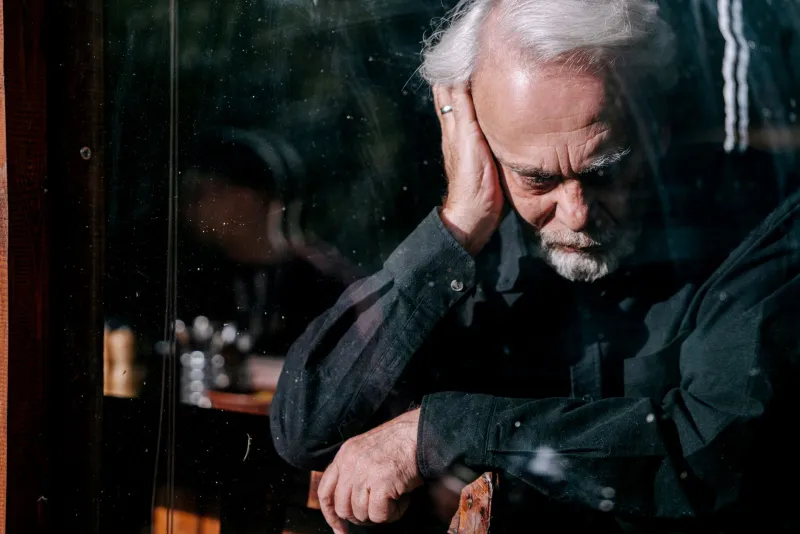
There is a troubling irony at the center of hair loss treatment: the men who have the most to gain from starting finasteride are frequently the ones who never do. While men in the early stages of thinning often act quickly — motivated by the fresh shock of change — those who have watched their hair recede significantly over years or even decades tend to stall, disengage, or dismiss treatment entirely. This is not a coincidence. It is the product of compounding psychological barriers, distorted information environments, and cultural narratives that make inaction feel rational even when the evidence points firmly in the opposite direction.
Understanding why this paradox exists — and how to dismantle it — matters enormously for anyone who has found themselves stuck in the orbit of "I'll deal with it later."
The Psychology of Accumulated Loss
Human beings are surprisingly poor at responding proportionally to gradual change. Psychologists call this phenomenon "change blindness" in its perceptual form, but a related dynamic applies to long-term physical changes like hair loss. When thinning happens slowly over months and years, the brain recalibrates its baseline repeatedly. Each new stage of loss becomes the new normal. By the time a man's hair loss reaches a clinically significant level — say, a Norwood IV or V classification — he may have already grieved the earlier stages so incrementally that the cumulative impact barely registers as an acute problem requiring action.
This recalibration creates a dangerous inertia. Men who have lived with visible hair loss for a long time often report feeling that "the damage is already done," even when clinical evidence demonstrates that finasteride can meaningfully halt further progression and, in many cases, support measurable regrowth. The perception of irreversibility — not the medical reality — becomes the primary driver of inaction.
Shame as a Silencing Force
Shame operates quietly but powerfully in this space. Hair loss, despite its extraordinary prevalence — affecting roughly 50 million men in the United States alone — carries a cultural weight that discourages open conversation. Many men report feeling embarrassed to admit that hair loss bothers them, interpreting the concern as vanity or weakness. This internalized stigma has a direct effect on treatment-seeking behavior: if acknowledging the problem feels shameful, seeking help for it feels even more so.
This dynamic is particularly pronounced among men who have experienced significant loss. Those in earlier stages of thinning may feel more comfortable framing treatment as "getting ahead of a problem." Men with advanced loss, by contrast, often feel exposed — as though pursuing treatment now would broadcast to everyone around them just how much the issue has mattered all along. The act of seeking help becomes, paradoxically, more threatening than the hair loss itself.
How Misinformation Fills the Silence
When shame prevents men from discussing hair loss openly with physicians, friends, or partners, they tend to turn to less reliable sources. Online forums, social media platforms, and algorithm-driven content ecosystems fill the informational vacuum — and they do not always fill it accurately.
Finasteride, as a prescription medication with a decades-long clinical track record, has been the subject of significant online controversy. Anecdotal reports of side effects, amplified through social sharing and confirmation bias, often receive far more attention than the robust body of peer-reviewed research supporting the drug's safety and efficacy. A man who spends an hour reading Reddit threads about finasteride will encounter a very different picture than a man who spends that same hour reviewing clinical literature or speaking with a board-certified dermatologist.
The asymmetry is not incidental. Negative experiences generate more engagement online than neutral or positive ones. A man who took finasteride for three years with no side effects and excellent results is unlikely to post about it daily. A man who believes he experienced an adverse effect — whether or not the evidence supports a causal link — may become a vocal and persistent presence in online communities. This skews perception dramatically, particularly for men who are already primed by shame to seek out reasons not to act.
The "Too Late" Fallacy
One of the most persistent and clinically inaccurate beliefs among men with advanced hair loss is that finasteride is only useful in the early stages. This is not supported by the evidence. While it is true that finasteride is most effective when initiated before significant follicle miniaturization has occurred, the medication continues to serve a meaningful purpose at later stages — primarily by halting or substantially slowing ongoing loss.
For a man who still has viable follicles in areas of thinning, finasteride can preserve what remains and, in some cases, support partial recovery. The realistic goal shifts from restoration to stabilization, which is a genuinely valuable outcome. Framing treatment success only in terms of dramatic regrowth sets an unrealistic standard that most men — at any stage — cannot expect. Stabilization of hair loss is a legitimate, clinically meaningful result that deserves recognition as such.
The "too late" belief often functions as a permission structure for continued avoidance. It sounds like a reasonable, evidence-based conclusion when it is actually a rationalization built on incomplete information.
Practical Frameworks for Overcoming Resistance
Breaking through these barriers requires more than motivation. It requires deliberate cognitive reframing and, in most cases, a structured first step that reduces the friction of action.
Reframe the goal. If regrowth feels out of reach, shift the objective to preservation. Stopping hair loss from progressing further is a meaningful and achievable outcome. Framing the decision around what can be protected — rather than what has already been lost — changes the emotional calculus significantly.
Separate perception from evidence. Before forming a view on finasteride's side effect profile, consult clinical sources. The FDA-approved prescribing information, peer-reviewed dermatology journals, and guidance from licensed healthcare providers offer a more accurate picture than social media threads. This does not mean dismissing individual experiences, but it does mean contextualizing them within the full body of evidence.
Lower the barrier to the first conversation. For many men, the single most effective step is scheduling a consultation with a dermatologist or a telehealth provider who specializes in hair loss. The conversation itself — without any commitment to treatment — often dissolves much of the resistance built up over years of avoidance. Hearing an accurate, personalized assessment from a qualified professional resets the information baseline.
Acknowledge the emotional component honestly. Hair loss affects self-image, confidence, and social experience in ways that are real and legitimate. Admitting that it matters is not vanity. It is an accurate recognition of how physical appearance intersects with psychological wellbeing. Men who allow themselves to take the concern seriously are more likely to seek and sustain effective treatment.
The Cost of Waiting
Every month that passes without treatment is a month in which hair loss continues to progress. Follicles that miniaturize beyond a certain threshold cannot be recovered. The window for meaningful intervention is real, and it narrows with time. Men who finally initiate treatment after years of avoidance frequently express regret — not about starting, but about waiting.
The paradox at the center of hair loss treatment is not inevitable. It is the product of identifiable, addressable barriers. Recognizing those barriers clearly is the beginning of moving past them.