Before the Needle: A Finasteride User's Guide to U.S. Blood Donation Eligibility

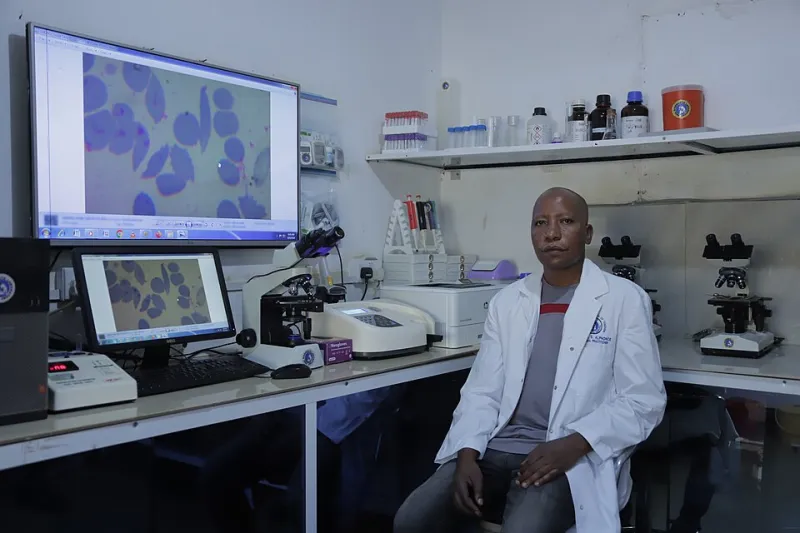
Photo: Chenspec, CC BY-SA 4.0, via Wikimedia Commons
Blood donation questionnaires are designed to protect recipients, not to judge donors. That is why a medication as common as finasteride can appear on a screening form even when the donor feels perfectly well. The question is not a diagnosis and it is not automatically a deferral. It is a prompt for the donation center to determine whether a waiting period or other precaution applies. For finasteride users, the practical answer is to confirm local policy before booking, bring accurate medication details, and avoid changing treatment simply to satisfy an online rule of thumb.
Why Donation Centers Ask About Finasteride
Finasteride is a 5-alpha reductase inhibitor used at 1 mg for male pattern hair loss and at 5 mg for benign prostatic hyperplasia. It is contraindicated in pregnancy because it can affect the development of the external genitalia in a male fetus. The theoretical concern in blood donation is that a pregnant recipient could be exposed to the drug through donated blood. Whether a center applies a deferral, and for how long, depends on its medical policies and the specific product involved.
A medication question on a donor form is not a verdict. Many medications are acceptable for donation with no waiting period. Others require a deferral based on the drug's half-life, the recipient risk, or both. The only reliable answer comes from the blood bank that will collect the donation.
Dose, Product, and Route Are Not Interchangeable
A 1 mg hair-loss tablet and a 5 mg prostate tablet contain the same active ingredient, but donation centers may treat them differently because the indication, dose, and patient population differ. Generic finasteride may raise the same questions as the brand-name product. Topical finasteride, compounded preparations, and combination products may fall outside a center's standard finasteride rule entirely. Dutasteride, a related drug, is not finasteride and may have its own deferral period.
This is why a search result that says finasteride means a one-month wait, or no wait at all, should not be treated as universal. Policies change, and the person answering the phone at your local center can confirm the rule that applies to your exact product.
Questions to Ask Before You Book
Call the donor center or check its current medication deferral list before making an appointment. Ask specifically whether finasteride is on the deferral list, whether the 1 mg and 5 mg strengths are handled differently, and whether there is a waiting period after the last dose. Ask whether topical or compounded finasteride is treated the same as oral tablets. If you donate plasma or platelets rather than whole blood, confirm whether the same rule applies. Ask what documentation, if any, the center wants and whether a note from your prescriber is useful.
If the first answer sounds uncertain, ask to speak with a supervisor or the medical director's office. A donor center would rather answer a detailed question in advance than turn a donor away at the chair.
Should You Stop Finasteride to Donate?
Do not stop a prescription medication solely to become eligible for blood donation without speaking with the prescriber. Treatment continuity matters, and a short pause may not even change your eligibility depending on the center's rule. If a deferral applies, the center will usually base it on the date of the last dose. That makes planning possible: confirm the waiting period, note the last dose date, and schedule the donation after the deferral ends.
Planning the Calendar
If you are eligible, prepare as you normally would: eat, hydrate, and bring identification. If you are deferred, ask for the specific reason and the date you may return. Keep a record of the last dose and the product strength. If you are due for a finasteride refill around the same time, there is no need to align the two unless your prescriber has advised a change. The donation schedule should follow the blood center's rules, not an internet summary.
Why Online Answers Oversimplify
Online discussions often compress a nuanced screening policy into a single sentence. One donor may report that he was accepted while taking 1 mg finasteride; another may report a one-month deferral after 5 mg. Both accounts can be true at different centers or under different policies. Donation type, local medical director policy, and the exact product can all change the answer. The responsible approach is to verify with the collector, not to rely on a forum post.
At the Donation Center
Be honest on the questionnaire and with the screening nurse. Bring a medication list that includes the product name, strength, frequency, and last dose. A deferral is a safety precaution, not a judgment about your health. If you are deferred, ask when you can return and what information would make the next visit smoother. At Finasteride Store, we encourage patients to keep clear medication records for exactly this kind of appointment.